Textiles
Mills and museums of wool
From cottage looms to steam powered mills, and the museums that run the machines.
Read the mill history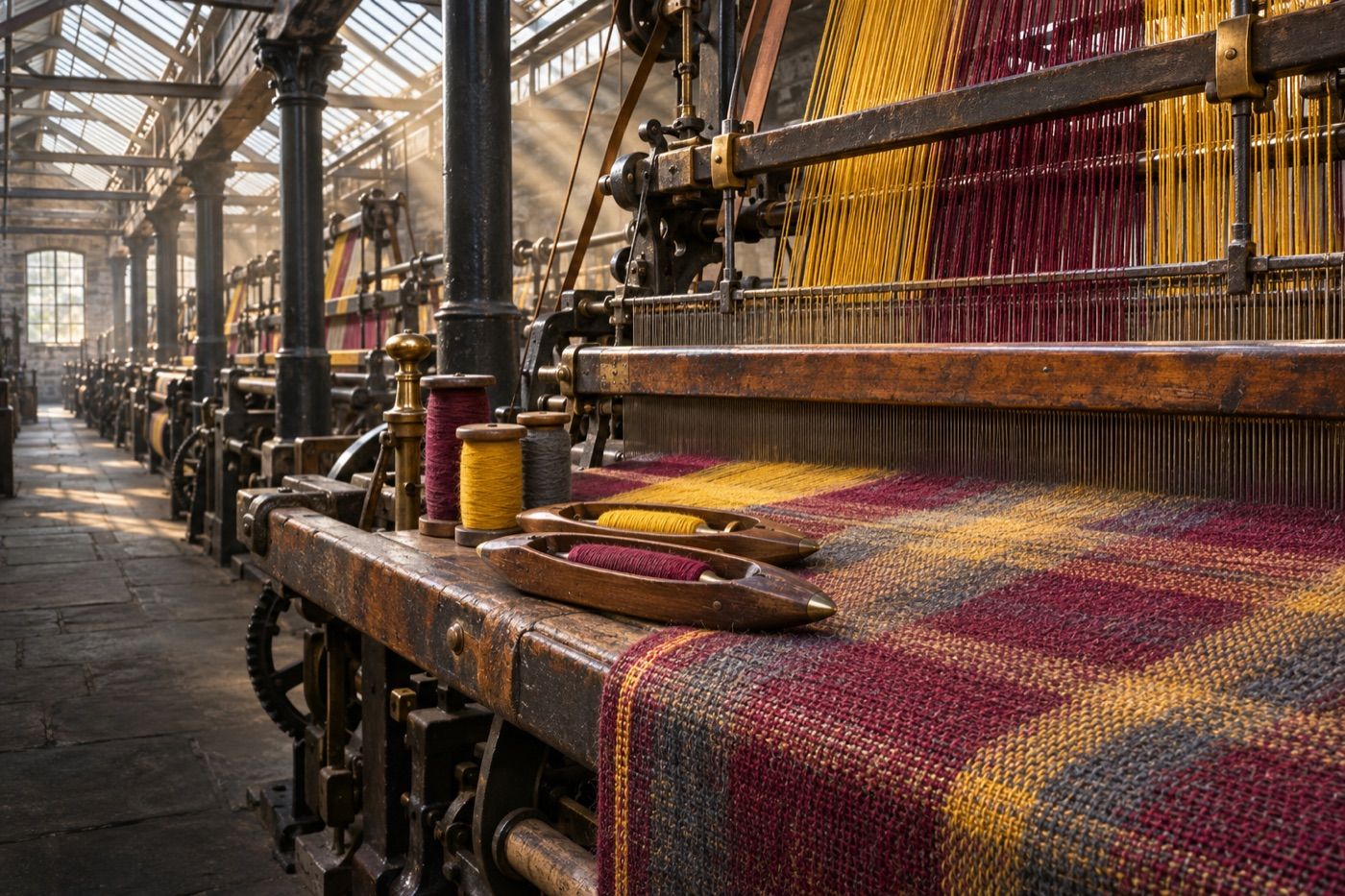
Independent guides / Inventors / Mills / Railways
The inventors, mills, steelworks and railways that made a region, with plain guides to what they did and where you can still see them. Scroll to unweave the picture, or move the cursor over it to loosen the threads.
What this site covers
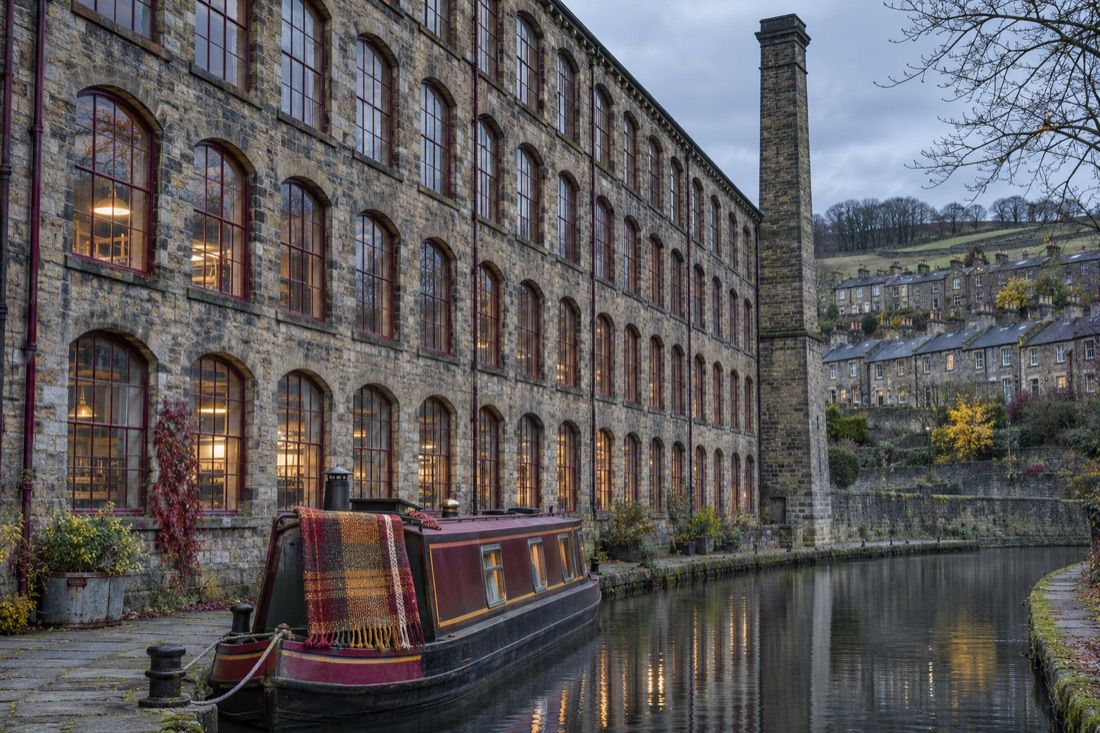
Yorkshire's industrial past is easy to feel and harder to explain. Mills still line the valleys, a Victorian model village stands beside the river and museums keep the machines running. Behind them are people who solved practical problems and sometimes changed how the rest of us live.
These guides follow the main threads: famous Yorkshire inventions, the history of textile mills, the story of the industrial revolution in the region and a list of industrial museums to visit. Where history is disputed, we say so.
Five inventions in date order
As you scroll, a patterned cloth is woven row by row. Each row of the pattern marks one Yorkshire invention.
1824
A Leeds bricklayer, Joseph Aspdin, patents a hydraulic cement made by burning limestone and clay, named for the stone it resembled.
Read the inventions overview1834
York born architect Joseph Hansom patents a low, light, two wheeled cab with the driver perched behind.
Read Hansom cab history1888
In Leeds, French inventor Louis Le Prince films short sequences on Leeds Bridge and at Roundhay, among the earliest on a single lens camera.
See the film pioneers1913
Sheffield metallurgist Harry Brearley notices that a high chromium steel does not rust, and cutlers turn it into knives.
See the steel story1934
Percy Shaw of Halifax patents a reflecting road stud whose rubber mounting wipes the lenses clean as wheels pass.
Who invented cat's eyesPlaces and stories
The cards lie on a tilted plane and flatten into a straight row as you scroll. Each one opens a guide.
Textiles
From cottage looms to steam powered mills, and the museums that run the machines.
Read the mill history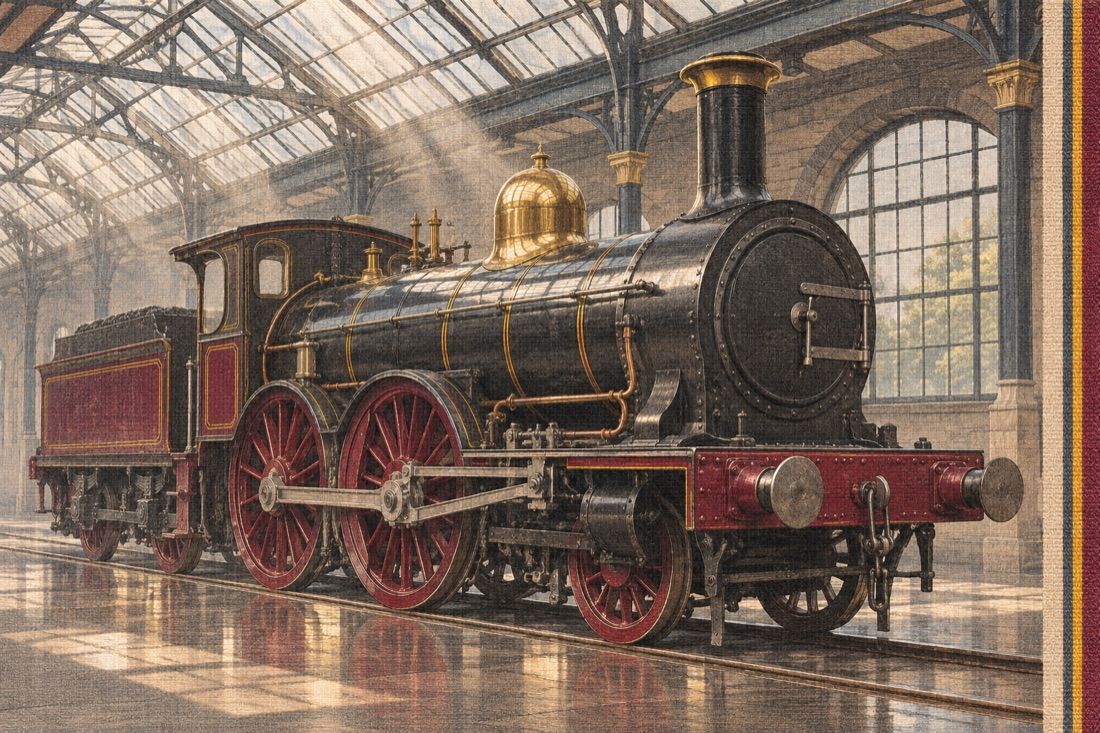
Railways
York holds the national railway collection and Leeds has a heritage line with eighteenth century roots.
Plan a museum trip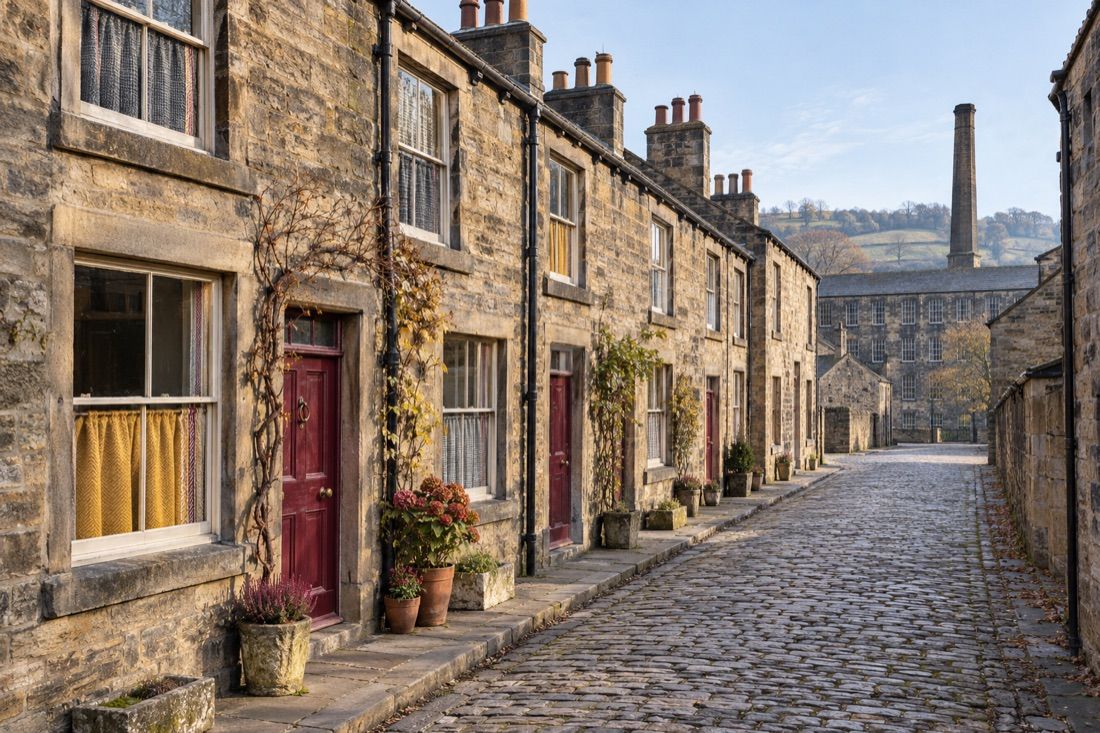
Saltaire
A planned industrial village on the River Aire, a World Heritage Site since 2001.
Read Saltaire history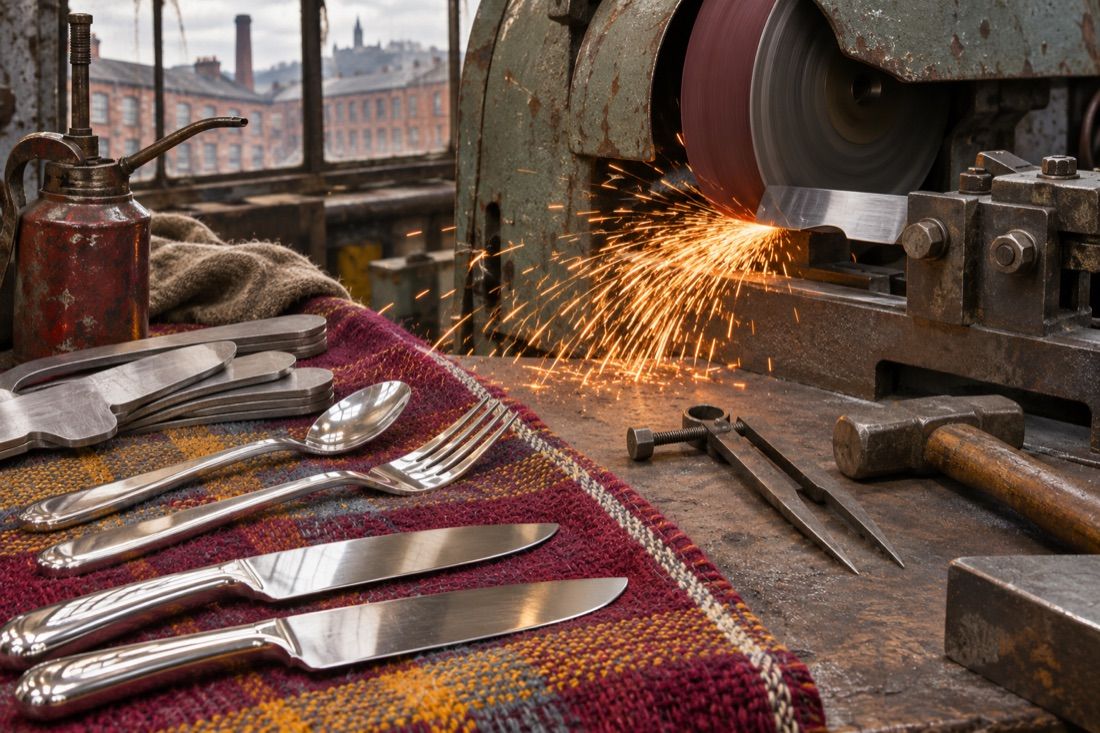
Sheffield
How Sheffield's metal trades led to stainless steel and what the city's museums show.
Follow the four threads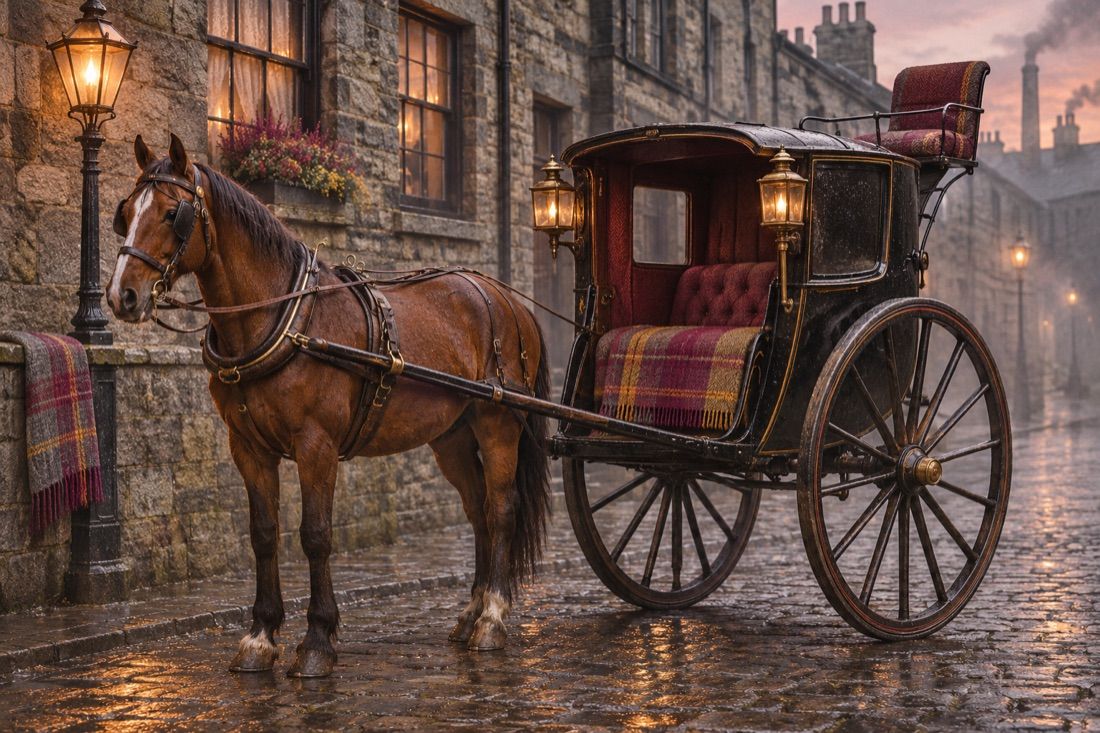
York
The light two wheeled cab that filled Victorian streets, and why it is called a hansom.
Read Hansom cab history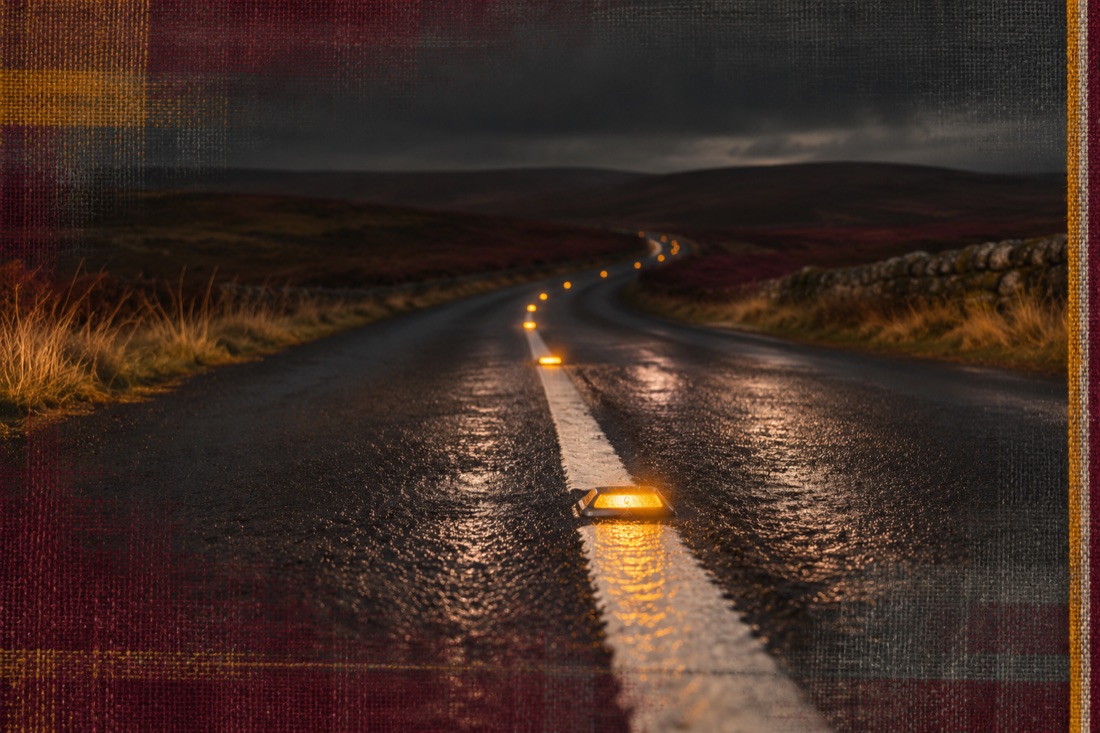
Halifax
Percy Shaw's 1934 patent, how the rubber pad works and which parts of the story are legend.
Who invented cat's eyesThe reading list
Quick answers