Guide 07 Yorkshire history
The Yorkshire industrial revolution: wool, coal, steel and rail
Industrial change in Yorkshire was not one story but four that overlapped: cloth, coal, steel and transport. Follow each thread, then see where they meet.
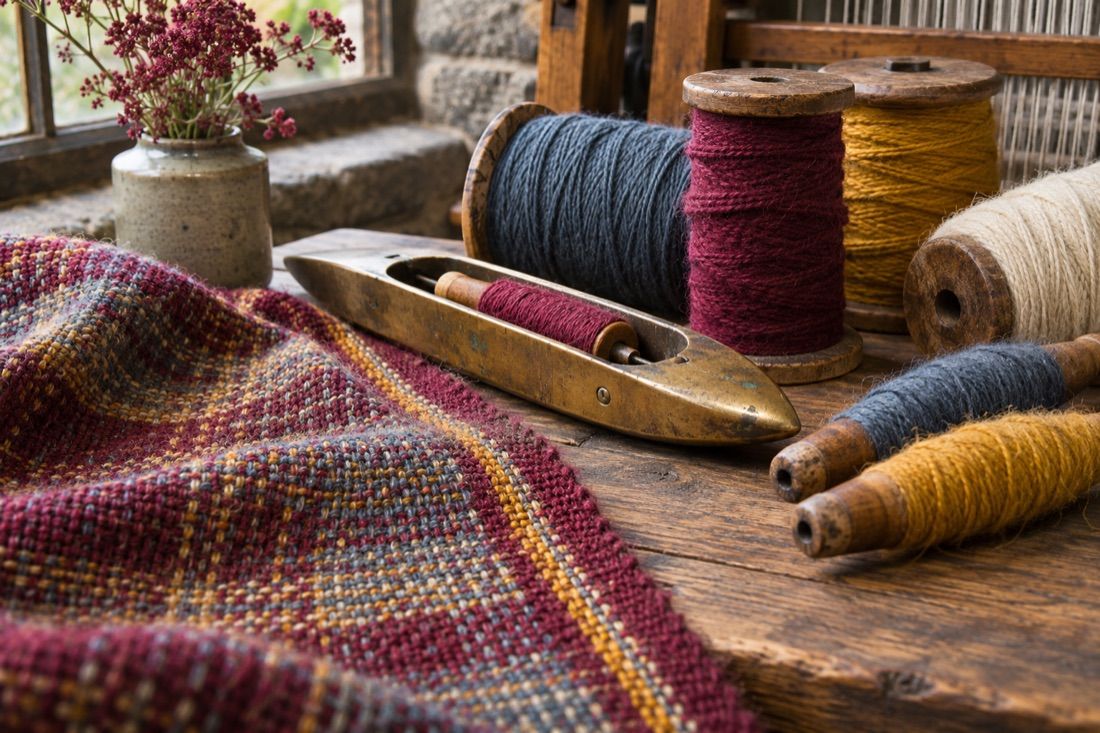
Four threads, one region
Asked what the main industry in Yorkshire was, a historian would answer by district. In the West Riding it was wool and worsted. In the coalfields of the south and west it was coal. In Sheffield it was steel and cutlery. Linking them was a growing web of canals and then railways. Each thread fed the others, because mills needed coal, steel made machines and transport carried both.
Wool and worsted
Textiles led the way. Spinning, weaving and finishing moved into mills across the valleys of the Aire, the Calder and their tributaries, with Bradford, Leeds, Halifax and Huddersfield each taking a share. The full story is in Yorkshire textile mills history.
Coal and canals
Coal seams run under much of South and West Yorkshire. Pits supplied mills, ironworks and homes, and waterways carried the coal and the finished goods. The Aire and Calder Navigation linked Leeds and Wakefield to the sea at Goole, and other canals reached across the Pennines. Many canal basins and warehouses survive, now used for flats and offices.
Sheffield steel
Sheffield had cutlery trades for centuries, powered by fast rivers. In the 1740s Benjamin Huntsman refined crucible steel there, giving makers a more uniform metal, and Sheffield plate, a way of bonding silver to copper, belongs to the same era. Stainless steel followed in 1913. Heavy industry shaped the city's valleys, and its museums now tell that story.
Early railways
Leeds has a claim to be a cradle of steam railways. The Middleton Railway was authorised by an Act of Parliament in 1758 to carry coal to the city, and from 1812 steam locomotives worked on it. Main line railways followed in the 1830s and linked industrial towns to ports and to London. York later became a major railway centre, and its museum preserves that history.
What it left behind
The change brought wealth for some and hardship for many. Towns grew quickly, housing and sanitation lagged, and working conditions in mills, mines and works were harsh. Today the legacy is in landscape and buildings: mill chimneys, canal basins, terraced streets and museums. See the museum guide to find a place that shows the thread you are most curious about.
A short timeline
Treat dates as markers, not boundaries. The Middleton colliery line was authorised in 1758, and the Halifax Piece Hall opened in 1779. Steam locomotives worked at Middleton from 1812. Joseph Aspdin patented Portland cement in 1824 and Joseph Hansom his cab in 1834, the same decade that main line railways reached the region. Stainless steel followed in 1913. Each date belongs to a longer process, so use them to find your place in the story rather than to close it.
Who paid the price
Industrial growth was not only a story of clever machines. Families moved from farms and villages into crowded towns, and work in mills, mines and forges was loud, dirty and risky. Reform came through factory acts, public health measures, schools and the labour movement, and the heritage sites you can visit today often tell both sides of that story. A good museum shows the machine and the person who tended it.