Guide 02 Yorkshire history
Hansom cab history: from a York architect's patent to the city streets
The hansom cab is a famous piece of Victorian transport that began as a patent taken out by an architect from York. Here is how it worked, why it carries his name and what ended its long run.
Who was Joseph Hansom
Joseph Aloysius Hansom was born in York in 1803 and trained as an architect. He designed many buildings, among them Catholic churches across Britain and, with a partner, the town hall of Birmingham. In 1843 he also founded the journal The Builder. His name lives on mostly because of a vehicle, not a building.
How the patent cab worked
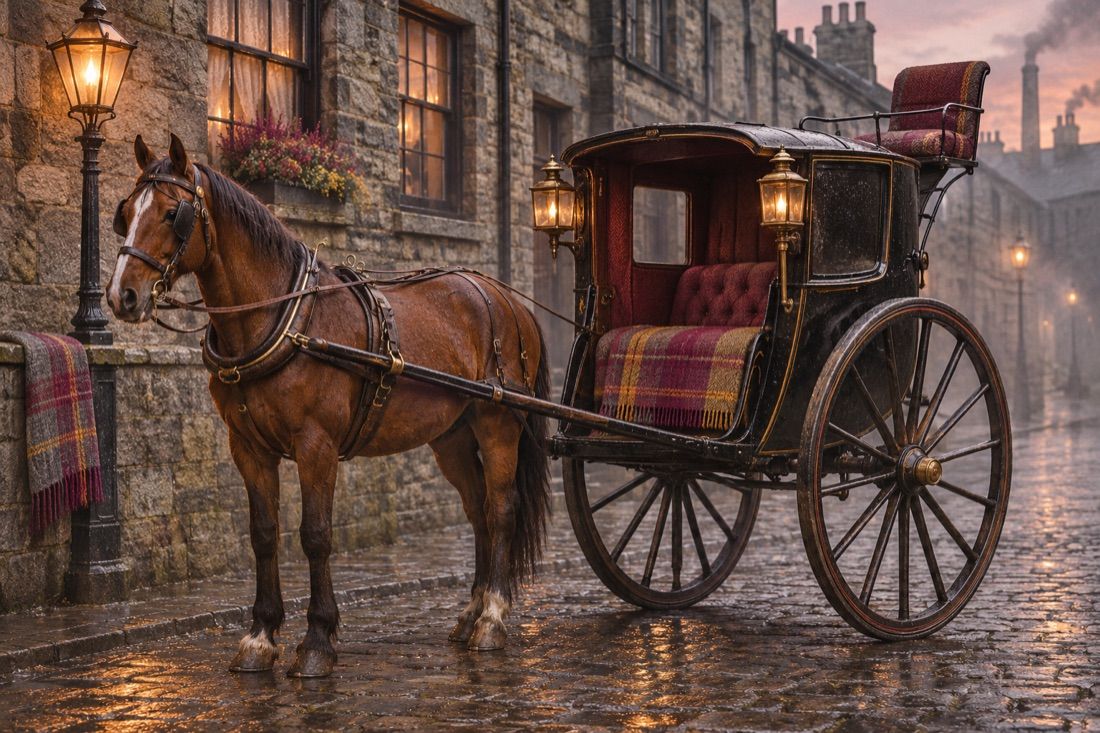
In 1834 Hansom patented what he called a Safety Cab. Its main ideas were simple and sound. The body hung low between two large wheels, which kept the centre of gravity down and made the cab less likely to tip. A single horse drew it. The driver sat on a raised seat behind the passenger compartment, so he could see over the roof, and the reins ran forward over the top. A small trap in the roof let passenger and driver speak, and the fare was usually paid through it.
Passengers climbed in at the front through a pair of doors that closed around the knees. The cab carried two people comfortably. The result was lighter and quicker than the old four wheeled carriages, and it could turn in narrow streets.
Why it is called a hansom
The name is simply the designer's surname. The cab that ran in London and other cities was a reworked version of the original, improved by other hands, and Hansom is said to have made little money from his patent. Still, the name stuck, and it is a good example of an invention that kept its inventor's name while passing out of his control.
Hansom versus the hackney carriage
A hackney carriage was a general term for a vehicle for hire. Older hackney carriages were four wheeled and heavier, and they were slower and less nimble. The hansom was a lighter two wheeled vehicle for fast hire in the city, which is why it became a fixture in crime stories of the period, including the Sherlock Holmes tales. Both kinds worked side by side for decades, and four wheeled cabs, sometimes nicknamed growlers, stayed in service for longer journeys and for families with luggage.
The end of the horse cab
Motor cabs began to appear in British cities in the late 1890s, and in the early twentieth century they took over the work of the horse. Horses and stables were costly, and motors could cover more ground in a day. The hansom did not vanish at once, but by the time of the First World War it was a fading sight in most cities. Today you see the type in films, paintings and a few ceremonial or tourist uses abroad.
Where to learn more
Transport museums and local history museums keep examples of horse drawn vehicles, and the story of the cab is told in books on London street life. For the broader picture of what Yorkshire invented, start with the inventions overview. For museums to visit, see the museum guide. Check each museum's collection page before travelling, because displays change.